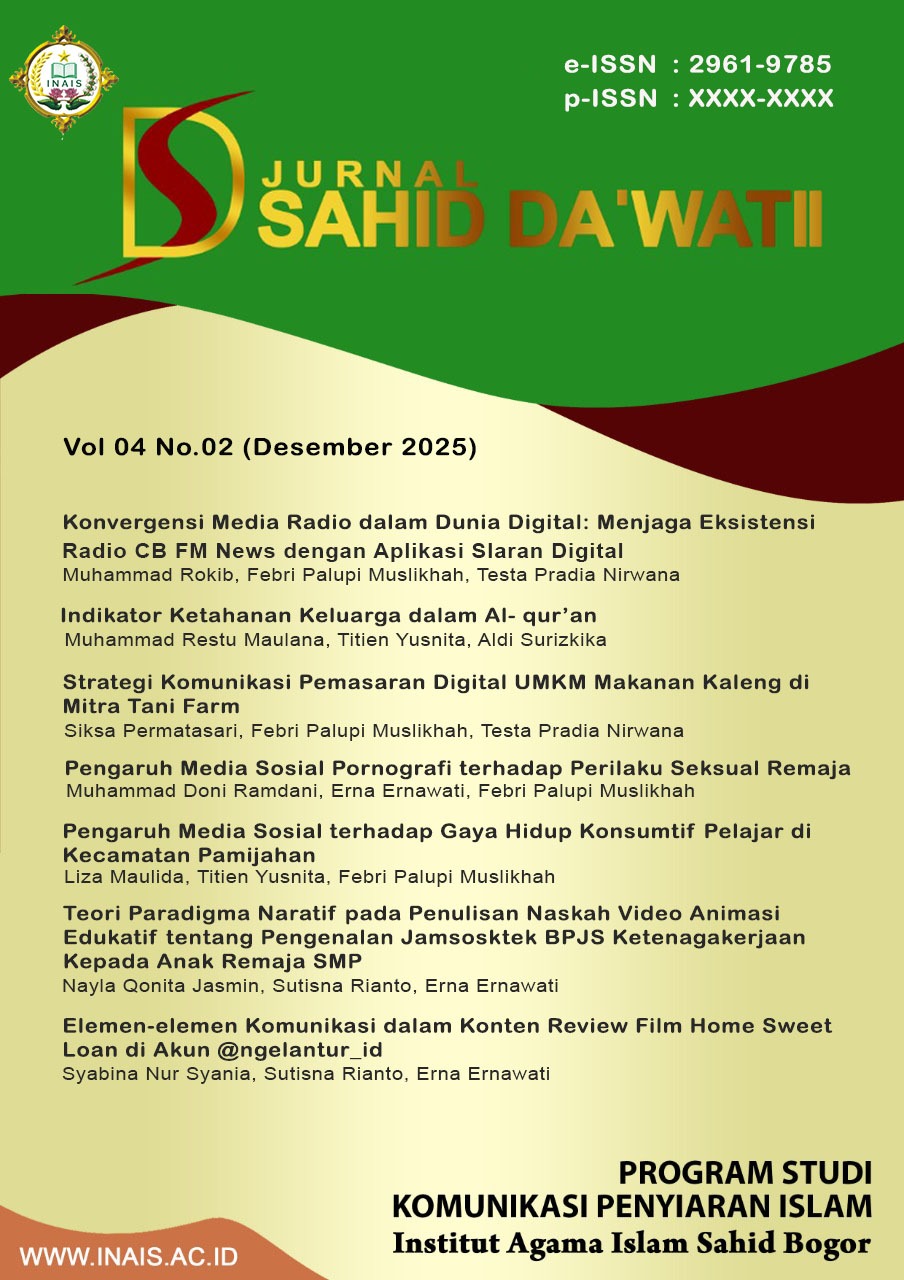





FAMILY RESILIENCE INDICATORS IN THE QUR'AN
Main Article Content
Muhammad Restu Maulana
Titien Yusnita
Erna Ernawati
This study examines the concept of family resilience (family resilience) through the lens of the Qur'an, emphasizing the integration of spiritual, social, and communicative values to build harmonious and resilient families. Using a qualitative descriptive approach, the research employs library research and thematic analysis (tafsir mawḍū'ī) of Qur'anic verses related to family resilience, supplemented by classical and contemporary exegeses such as Tafsir Al-Misbah (Quraish Shihab) and Tafsir Ibn Kathir. Key findings reveal that Qur'anic family resilience revolves around three coreprinciples: sakinah (tranquility), mawaddah (affection),and rahmah (compassion), manifested through effective communication (qaulan sadīdan, qaulan layyina), collective family roles, and conflict management grounded in Islamic values. The study also identifies modern challenges role dysfunction, economic pressures, and moral degradation while proposing Qur'anic solutions such as faith reinforcement, consultation (shura), and community engagement. This research contributes to Islamic family studies, family communication, and thematic exegesis, offering practical recommendations for community-based and policy-level family resilience programs.